
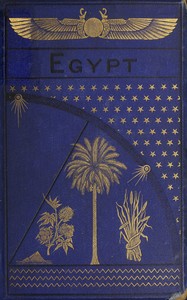
Egypt of the Pharaohs and of the Khedivé by F. Barham Zincke
First published in 1871, this isn't a dry history textbook. It's a travelogue with a split personality. Foster Barham Zincke, an English vicar with a keen eye, takes us on a journey through two Egypts in one.
The Story
The 'story' is Zincke's own trip. The first half of the book is a classic tour of ancient wonders. He describes the temples of Thebes, the grandeur of the pyramids at Giza, and the mysteries of the Valley of the Kings with the awe of his time. But he doesn't stop there. The book's unique twist is its second act. Zincke pivots to the Egypt of the 1860s—a country under the ambitious Khedive Ismail Pasha, who was desperately trying to modernize and Europeanize his nation. Zincke walks us through the brand-new streets of Cairo, comments on the recently opened Suez Canal (a world-changing project), and observes the politics, economy, and social life of a country in rapid, often chaotic, transition. The 'plot' is the tension between these two worlds: the immutable stone of the pharaohs and the shifting sands of 19th-century geopolitics.
Why You Should Read It
You should read it for the voice. Zincke is a product of his time—a confident Victorian gentleman—and his perspective is unfiltered. His observations on Egyptian society, Islam, and modernization are sometimes insightful, sometimes prejudiced, and always revealing of how a Westerner saw the 'Orient.' This isn't a flaw; it's the book's greatest strength. It lets you see history happening in real time, through a very specific lens. You get archaeology, political commentary, and cultural critique all rolled into one. It’s like reading a deeply intelligent, slightly grumpy blog from 150 years ago. The way he draws lines (or fails to draw them) between Pharaoh Ramses and Khedive Ismail makes you think about how power, legacy, and national identity are constructed.
Final Verdict
This book is perfect for history lovers who want something beyond the facts. It's for travelers who wonder what their destination was like generations ago. It's also a great pick for anyone interested in the history of how the West viewed the Middle East. If you enjoy primary sources where the author's personality jumps off the page—with all its brilliance and biases intact—you'll be captivated. Just be ready for a viewpoint that is decidedly, fascinatingly, from 1871. It's not the last word on Egyptian history, but it's a thrilling first-hand account that makes that history feel alive and strangely immediate.
This content is free to share and distribute. Preserving history for future generations.
Aiden Williams
9 months agoCompatible with my e-reader, thanks.
William Taylor
1 year agoRead this on my tablet, looks great.
John Davis
2 years agoGreat read!
David Allen
1 year agoWithout a doubt, it creates a vivid world that you simply do not want to leave. I couldn't put it down.



Nancy Thomas
11 months agoI found the author's tone to be very professional yet accessible, the insights into future trends are particularly thought-provoking. A rare gem in a sea of mediocre content.