
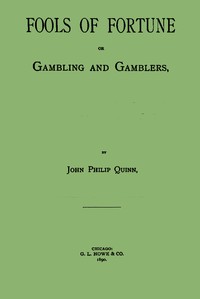
Fools of Fortune; or, Gambling and Gamblers by John Philip Quinn
Published in 1890, Fools of Fortune; or, Gambling and Gamblers is a unique beast. It's part memoir, part exposé, and part fiery sermon, all rolled into one. The author, John Philip Quinn, presents himself as a reformed professional gambler who's seen the light and wants to save you from the darkness.
The Story
There's no traditional plot here. Instead, Quinn takes you on a tour of the gambling underworld of his era. He starts by defining different types of gamblers, from the occasional better to the hopeless addict. Then, he gets into the nitty-gritty. He explains, in sometimes painstaking detail, how every major game of chance was fixed. Faro, poker, dice—you name it, he describes the mechanical devices, marked cards, and sleight-of-hand used to cheat players. He doesn't stop at card tables; he also attacks lotteries and stock market speculation as forms of legalized gambling. The "story" is the relentless unveiling of a rigged system, populated by clever sharks and desperate "fools" destined to lose their money, their morals, and often their families.
Why You Should Read It
What makes this book compelling isn't just the historical carnival of cons (though that's fun). It's Quinn's voice. He writes with the zeal of a convert. You can feel his mixture of pride in his former skills and genuine horror at how he used them. His warnings about the psychological spiral of a gambler feel startlingly modern. When he describes a man betting his last dollar, convinced his luck must change, you're not just reading a moral lesson—you're seeing a raw portrait of addiction. It's a time capsule of Gilded Age vice, but the core message about risk, greed, and self-deception hasn't aged a day. It makes you look sideways at any "get rich quick" scheme, past or present.
Final Verdict
This isn't a breezy beach read. It's for the curious reader who loves social history, true crime, or psychology. If you enjoy books that show you how things really worked behind the scenes in another era, you'll be fascinated. It's perfect for fans of books like The Devil in the White City who appreciate a deep dive into the darker corners of the past. Quinn can be repetitive and his moralizing is thick, but push through—the gritty details and his passionate, insider's perspective are absolutely worth your time. Just don't expect to look at a deck of cards the same way again.
This content is free to share and distribute. Preserving history for future generations.
Ashley Gonzalez
3 months agoThe layout of the digital version made it easy to start immediately, the practical checklists included are a great touch for real-world use. I appreciate the effort that went into this curation.
Karen Scott
6 months agoI didn't expect much, but the content flows smoothly from one chapter to the next. One of the best books I've read this year.








Emily White
4 months agoExceptional clarity on a very complex subject.