
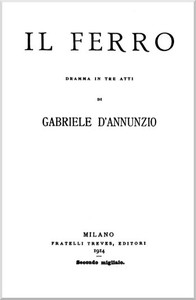
Il ferro by Gabriele D'Annunzio
Let's talk about a book that feels like two different stories fighting for the same page. On one hand, it's a stark, close-up look at an Italian officer's experience in World War I. On the other, it's a swirling, poetic meditation on art, love, and what it means to be a man. Gabriele D'Annunzio, a national icon and a famously flamboyant personality, wrote from a place of intense personal passion, and it bleeds into every sentence.
The Story
The plot follows Paolo Tarsis, a young officer from a good family, as he leaves his life of art and refinement for the trenches. He's in love with Isabella, a woman who represents the beautiful, civilized world he's leaving behind. The war, with its grinding terror, mechanical slaughter, and filthy reality, is the absolute opposite of that world. The story isn't about grand strategies or famous battles. It's about Paolo's daily struggle: the boredom, the sudden bursts of violence, the camaraderie with his men, and the constant, haunting memory of Isabella and the life he might lose. The 'iron' in the title isn't just the weapons; it's the hardening of his heart, the weight of duty, and the cold reality he must embrace to survive.
Why You Should Read It
You don't read D'Annunzio for a fast-paced plot. You read him for the atmosphere. He makes you feel the contrast so deeply it gives you whiplash. One paragraph you're in a muddy hole, listening to the groan of the earth under shellfire. The next, Paolo is remembering a sculpture or a line of poetry, and the prose becomes lush and musical. This clash IS the point. It asks if beauty and sensitivity are weaknesses in a world that runs on iron and blood. Paolo isn't a typical hero; he's often introspective and tormented. But that's what makes him feel real. His internal war is one anyone can understand: trying to hold onto who you are when everything around you tries to change you.
Final Verdict
This book is perfect for readers who love literary fiction and don't mind a story that simmers more than it sprints. If you enjoyed the psychological depth of 'A Farewell to Arms' but wished it was written by someone with the soul of a Romantic poet, you'll find 'Il ferro' fascinating. It's also a great pick for anyone interested in World War I literature from a non-English perspective. Fair warning: D'Annunzio's style is dense and ornate. It demands your attention. But if you give it, you'll be rewarded with a reading experience that's genuinely unique—a war story painted in gold leaf and blood.
This text is dedicated to the public domain. Thank you for supporting open literature.
Matthew Williams
1 year agoI decided to give this a try based on a colleague's recommendation, the critical analysis of current industry standards is very timely. It’s a comprehensive resource that doesn't feel bloated.
Robert Johnson
1 month agoI was skeptical about the depth of this book at first, but the emphasis on ethics and sustainability within the topic is commendable. Definitely a five-star contribution to the field.
Mary Lopez
4 months agoInitially, I was looking for a specific answer, but the level of detail in the second half of the book is truly impressive. It’s hard to find this much value in a single source these days.
Michael Miller
2 years agoMy first impression was quite positive because the bibliography and references suggest a high level of research and authority. Truly a masterpiece of digital educational material.







Charles Jones
7 months agoThe layout is perfect for tablet and e-reader devices.