About 36 minutes
San Xavier Del Bac, Arizona: A Descriptive and Historical Guide — Background and Themes
Architecture
8,203 recorded words. 0 minutes difference from this book's estimate.
View Gutenberg source #53127
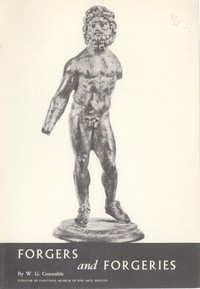
The source record for Forgers and Forgeries — Context and Discussion measures this digital text at 8,195 words, 36 min estimated reading time, and 1 detected text section.
The text analysis averages about 25.8 words per sentence, while the detected sections provide another way to judge how the source is divided.
Project Gutenberg metadata also associates the work with “Art -- Forgeries,” connecting these edition facts with the source record’s subject description.
Explore this collection
These alternatives are selected using recorded categories and estimated reading time.
About 36 minutes
Architecture
8,203 recorded words. 0 minutes difference from this book's estimate.
View Gutenberg source #53127About 35 minutes
Architecture
7,847 recorded words. 1 minutes difference from this book's estimate.
View Gutenberg source #46578About 37 minutes
Architecture
8,432 recorded words. 1 minutes difference from this book's estimate.
View Gutenberg source #58312Search stored excerpts and compare books → Choose by your preferences →
Choices use stored catalog measurements. Estimates vary with reading speed. A shared category is a catalog label, not a claim that two books have the same argument or literary quality.
Search reads excerpt text stored with this catalog and links to its associated Gutenberg record. The connection is stored in the site database; this tool does not recheck that every excerpt is word-for-word identical to that external record. Excerpt search does not cover every chapter and does not verify historical publication dates.
Catalog snapshot checked: 2026-09-26. Coverage: 93 public books, 93 available source excerpts.
Calculated from edition completeness, EPUB availability, text structure and catalogue metadata. Not a user rating.
Total of 100 points, scaled to a 2.5-5.0 range. Editions with an empty description or a missing EPUB file are not scored.
Public-domain source text
The source text is kept in the dedicated reader, separate from this catalogue record and its commentary.
Constable opens by dismantling the conventional notion that forgery is inherently sinful, arguing instead that the essential element lies in how an object is presented, not its original purpose. He cites Michelangelo's youthful Sleeping Cupid—buried to imitate antiquity and later sold as genuine—as a case where deceit coexisted with a challenge to the past, a nuance that sets the tone for the entire work. The author's voice is measured and analytical, frequently qualifying broad statements with phrases like "in fact, however" and "without doubt," which signal a careful, evidence-based approach.
Constable identifies three primary motives for forgery: financial gain, a spirit of rivalry with past masters, and occasionally a blend of both. He illustrates rivalry through Giovanni Bastianini, whose admiration for early Renaissance sculpture led him to produce imitations that were later exploited by a dealer, and Alceo Dossena, who initially sought to prove his skill before knowingly creating forgeries purchased by museums. The goldsmith Rouchomovski is presented as a clearer case of conscious competition. Crucially, Constable avoids moralizing; he treats these figures as craftsmen whose abilities, though misdirected, command respect. The narrative voice remains detached, presenting evidence without sensationalism, which lends credibility to his analysis.
Constable devotes significant attention to scientific methods, from microscopy and X-rays to spectrographic analysis and radiocarbon dating. He notes that photography was the first great step forward, enabling comparisons previously impossible. However, he warns against "blind faith" in technology, emphasizing that scientific apparatus is not an oracle but a tool whose results require human interpretation. The author's own caution is evident in his phrasing: "All that it does is to make possible the discovery of physical facts bearing upon these matters, which have to be observed and interpreted by human minds." This insistence on the primacy of judgment over instrumentation is a recurring theme, reflecting Constable's background as a curator.
Throughout the text, Constable grounds his arguments in specific examples. He describes a forgery of a Greek bronze statuette as a "type" forgery, exceptionally difficult to detect, likely made for the tourist trade. He contrasts a forged Utrillo painting with a genuine one, pointing to "clumsy handling of paint and drawing" as telltale signs. The Piltdown skull forgery is mentioned as a case where fluorination analysis proved decisive. These examples are not merely illustrative; they serve as evidence for his broader claims about the interplay between human skill and scientific scrutiny. The author's voice remains consistent—precise, understated, and focused on observable details rather than conjecture.
Constable's essay rewards readers who attend to his careful distinctions between motive, method, and detection. The text moves from philosophical framing to technical exposition, then back to concrete cases, creating a rhythm that mirrors the investigative process itself. Readers should note how the author's own voice—measured, qualifying, and skeptical of easy answers—embodies the very critical thinking he advocates for authenticating works of art.
I think often of Constable's quiet insistence that a forgery is not a lie but a craft with a story. That same thoughtful patience sits in Stained Glass Work: A text-book for students and workers in glass — Story, Setting & Ideas, where light and fracture ask for honest hands. Both are about finding truth beneath a surface. There’s kinship in that. Old friends, waiting for readers who see slowly.
Build a private reading journal entry for this title.









