About 36 minutes
San Xavier Del Bac, Arizona: A Descriptive and Historical Guide — Background and Themes
Architecture
8,203 recorded words. 1 minutes difference from this book's estimate.
View Gutenberg source #53127
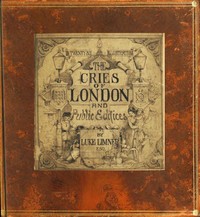
Before opening London Cries & Public Edifices — Reading Notes, the edition data offers a quick orientation: 8,432 words, 37 min estimated reading time, and 2 detected text sections.
The text analysis averages about 19.4 words per sentence, while the detected sections provide another way to judge how the source is divided.
Project Gutenberg metadata also associates the work with “Cries -- England -- London,” connecting these edition facts with the source record’s subject description.
Explore this collection
These alternatives are selected using recorded categories and estimated reading time.
About 36 minutes
Architecture
8,203 recorded words. 1 minutes difference from this book's estimate.
View Gutenberg source #53127About 36 minutes
Architecture
8,195 recorded words. 1 minutes difference from this book's estimate.
View Gutenberg source #64686About 35 minutes
Architecture
7,847 recorded words. 2 minutes difference from this book's estimate.
View Gutenberg source #46578Search stored excerpts and compare books → Choose by your preferences →
Choices use stored catalog measurements. Estimates vary with reading speed. A shared category is a catalog label, not a claim that two books have the same argument or literary quality.
Search reads excerpt text stored with this catalog and links to its associated Gutenberg record. The connection is stored in the site database; this tool does not recheck that every excerpt is word-for-word identical to that external record. Excerpt search does not cover every chapter and does not verify historical publication dates.
Catalog snapshot checked: 2026-09-26. Coverage: 93 public books, 93 available source excerpts.
Calculated from edition completeness, EPUB availability, text structure and catalogue metadata. Not a user rating.
Total of 100 points, scaled to a 2.5-5.0 range. Editions with an empty description or a missing EPUB file are not scored.
Public-domain source text
The source text is kept in the dedicated reader, separate from this catalogue record and its commentary.
John Leighton, writing under the pseudonym Luke Limner, structures London Cries & Public Edifices as a sequence of paired plates: each street vendor's call introduces a nearby landmark. The tinker swinging his fire-pot to mend a saucepan leads to the Tower of London; the water-cress seller's morning cry precedes Lambeth Palace. This juxtaposition is not merely decorative—Leighton uses the vendor's trade to frame the building's function, as when the old-clothes Jew purchasing a court suit at St. James's Palace ties the palace's royal ceremonies to the second-hand market. The result is a guidebook that reads like a walking tour, where the city's architecture is inseparable from the commerce at its thresholds.
Leighton renders each cry in a distinct typographic register. The tinker's call is given as a full line: “POTS AND KETTLES TO MEND!—COPPER OR BRASS TO MEND!”—the capitals and em-dash mimicking the shout's rhythm. The match-seller's plea is softer: “MATCHES!—BUY A BOX OF MATCHES OF A POOR GIRL!” Here the dash after “Matches!” creates a pause before the appeal, emphasizing the seller's poverty. Leighton also notes that the old brimstone match is “fast disappearing before the modern lucifer or congreve,” a detail that dates the text precisely to the 1850s shift in technology. The milkmaid's cry, “MILK BELOW!”, is printed as a single line, and Leighton explains that her customers live in “milk-walks,” a term he treats as trade jargon. These cries are not quoted verbatim from life but stylized for the page, each one a miniature performance of class and occupation.
Leighton's descriptions of buildings are laced with incidental social facts. At Lambeth Palace, he records the bishop's dole: “three stone of beef, ten pitchers of broth, five quartern loaves, and twopence in copper” distributed daily to ten poor parishioners. This inventory of charity is as precise as the architectural note that Cardinal Morton built the gate in 1490. At the East India House, Leighton states that the Company “rules a population of 85,000,000 natives of India, besides 51,000,000 who are directly or indirectly affected by them”—a statistic that turns the building into a symbol of imperial reach. The Tower of London is described as “the fortress, the palace, and prison,” and Leighton adds that the scaffold stood “near which was the scaffold on which so many have fallen,” a phrase that evokes execution without naming victims. These details transform each edifice from a mere structure into a nexus of power, poverty, and punishment.
Leighton frequently reads social identity through dress and posture. The Turkish rhubarb seller is identified as a Turkish Jew because his caftan is “fastened on the left: the Turks make a distinction by adjusting theirs on the right.” The old-clothes Jew is judged “some dignitary of the synagogue” by his “beard and band round his waist.” The milkmaid “did, until of late, wear the national hat,” a detail that marks her as Welsh. In the match-seller's plate, Leighton notes that she is “appealing to a lady and gentleman, (whose shadows are seen in the picture)”—the parenthetical shadow is a metafictional cue, reminding the reader that this is a composed image. The grinder at Lincoln's Inn wears “a smile of satisfaction” as he works “amongst the cleavers of Clare Market,” a phrase that links his cheer to the butchers' tools. These observations treat the vendor's body as a text, legible for origin, rank, and mood.
Leighton repeatedly signals that he is documenting a city in flux. The milkmaid's scene is explicitly “a picture of the past”: St. James's Park “no longer affords pasture for cattle; population has driven them farther away.” The Tower's grand storehouse, “destroyed by fire, Nov. 1841,” is already gone by the time of writing. St. James's Palace lost “a great portion of the south-eastern corner” to fire in 1809. These asides create a temporal layering: the reader sees the 1851 view while being told what has vanished. The match-seller's old brimstone match is “fast disappearing,” and the milk is “usually adulterated one-third”—a present-tense claim that implies a recent decline. Leighton does not mourn these changes; he simply notes them, letting the architecture stand as a record of what remains. The result is a book that is as much about loss as about presence.
Leighton's method rewards a slow reading that moves between image and text. The cries are not mere captions but counterpoints: the tinker's fire-pot and the Tower's battlements, the water-cress seller's dawn and Lambeth's dole. Readers may notice how often Leighton uses the word “here”—“Here is conducted all the official business,” “Here is the Chapel Royal”—as if pointing to a plate. The book is best approached as a series of tableaux, each one a freeze-frame of a city that was already, in 1851, receding into memory.
I’ve often lingered over how Leighton’s street vendors carry their whole world in a basket or a cry—each stall a small life compressed. There is a similar hush in Unfinished Portraits: Stories of Musicians and Artists — Themes and Context, where unfinished work feels less like loss and more like a held breath, a portrait waiting to speak.
Your answers remain private and are stored only in this browser.









