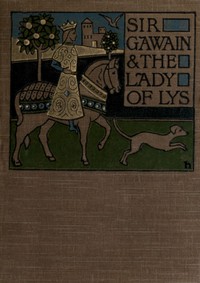
The volume opens with an introduction placing these stories in close sequence to Gawain's Grail castle visit, drawn from the same manuscript (B.N. 12576). The first tale begins with a fierce combat in a hall, where a child's laughter at glancing sword blades becomes a striking, recurring image. The child, held by his mother, reaches for his own shadow on the steel, a detail that recurs as the fight intensifies. This early scene establishes a tension between violence and innocence, and the mother's risky intervention—throwing herself between the combatants—sets a pattern of female agency that shapes the narrative.
A Child's Laughter Amidst Swordplay
The opening excerpt centers on a hall fight between Sir Gawain and another knight, with a child present. The child's reaction—laughing blithely, stretching up to his shadow on the blade—is described twice, emphasizing its uncanny quality. The mother tears the child from the king's arms and thrusts herself between the swords, crying out for mercy. This moment is not merely a plot device; it reveals how the text uses physical gestures and repeated motifs to build emotional weight. The laughter recurs when the child sees his shadow, and the narrator notes that many wept. This early passage signals that the story will intertwine combat with familial bonds and that children may serve as both symbols and catalysts.
The Lady's Bold Intervention
In the middle excerpt, the lady of Lys acts decisively. After Gawain nearly bears his opponent to the ground, she seizes her child and runs between the fighters, risking being cut in pieces. Her words—'Son, pray thy father that he have pity on thy mother'—reveal a complex family dynamic: the opponent is her brother, and the child's father is Gawain? The text leaves relationships ambiguous, but her action halts the combat. The king eventually parts them, and peace is made with homage and amends. The lady's role is not passive; she drives the resolution. Readers should note how her intervention contrasts with the knights' pride and how the child's laughter persists even as blood is shed.
Structure and Sequence of Tales
The introduction explains that the volume contains three separate tales, following in close sequence from the Grail visit. The first tale concerns the expedition against Chastel Orguellous; the second involves Gawain's relations with the lady of Lys, recorded twice in the Perceval-Wauchier texts. The translator notes that the second adventure is related twice, once in the Brun de Branlant section. This structural note is crucial for a first reading: the narrative may loop or revisit events. The excerpts show a shift from hall combat to a peace negotiation involving homage and the freeing of serfs. Readers should track how each tale connects to the next and whether the lady reappears.
Voice and Translation Choices
Jessie L. Weston's translation uses a formal, slightly archaic English that preserves the rhythm of the original verse. Phrases like 'right well acquit himself' and 'drave forward at him' maintain a medieval flavor. The dialogue is direct: 'Now by God I will see the which of ye twain will slay him.' Weston also includes explanatory notes, as seen in the introduction's reference to 'Brun de Branlant section.' Her choices shape the reader's experience—she renders the child's laughter as 'blithely' and 'gaily,' emphasizing joy over fear. The illustrations by Morris Meredith Williams, though not excerpted, likely complement this tone. For a first reading, attend to how Weston balances clarity with period diction.
These excerpts reveal a narrative where combat is repeatedly interrupted by a woman and child, whose laughter and shadow-play undercut knightly violence. The three tales may share this motif, but the incomplete excerpts prevent full certainty. A first reading benefits from noting how the child's laughter recurs and how the lady's agency shifts the plot. The translation's notes and structure offer guidance, but the text rewards attention to its recurring physical details—the glancing blades, the child's hands, the mother's body—as they accumulate meaning across the tales.
That grey afternoon, I kept returning to Gawain’s uneasy blend of courtesy and menace, the lady’s quiet authority shifting every scene. Somehow that led me to wonder about how light falls through stone, and I found myself hours later holding The Church of Sancta Sophia, Constantinople: A Study of Byzantine Building — Edition Insights, thinking how both worlds build meaning from shadows and deliberate silence.