About 69 minutes
The carriages at Shelburne Museum — Text and Context
Architecture
15,680 recorded words. 7 minutes difference from this book's estimate.
View Gutenberg source #70206
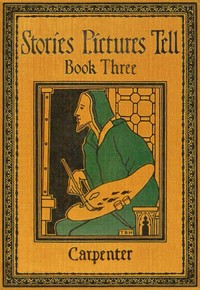
Stories Pictures Tell. Book 3 — Themes and Context can be approached with a clearer sense of reading commitment from its source measurements: 17,393 words, 1 hr 16 min estimated reading time, and 11 detected text sections.
The text analysis averages about 15.8 words per sentence, while the detected sections provide another way to judge how the source is divided.
Project Gutenberg metadata also associates the work with “Painters,” connecting these edition facts with the source record’s subject description.
Explore this collection
These alternatives are selected using recorded categories and estimated reading time.
About 69 minutes
Architecture
15,680 recorded words. 7 minutes difference from this book's estimate.
View Gutenberg source #70206About 84 minutes
Architecture
19,176 recorded words. 8 minutes difference from this book's estimate.
View Gutenberg source #48281About 87 minutes
Architecture
19,809 recorded words. 11 minutes difference from this book's estimate.
View Gutenberg source #35709Search stored excerpts and compare books → Choose by your preferences →
Choices use stored catalog measurements. Estimates vary with reading speed. A shared category is a catalog label, not a claim that two books have the same argument or literary quality.
Search reads excerpt text stored with this catalog and links to its associated Gutenberg record. The connection is stored in the site database; this tool does not recheck that every excerpt is word-for-word identical to that external record. Excerpt search does not cover every chapter and does not verify historical publication dates.
Catalog snapshot checked: 2026-09-26. Coverage: 93 public books, 93 available source excerpts.
Calculated from edition completeness, EPUB availability, text structure and catalogue metadata. Not a user rating.
Total of 100 points, scaled to a 2.5-5.0 range. Editions with an empty description or a missing EPUB file are not scored.
Public-domain source text
The source text is kept in the dedicated reader, separate from this catalogue record and its commentary.
Flora L. Carpenter, an instructor in drawing at Waite High School in Toledo, Ohio, designed Stories Pictures Tell, Book 3 as a practical tool for teachers who felt unprepared to lead picture-study lessons. The book's preface explains that while information about artists was plentiful, details about specific paintings were scarce—a gap Carpenter aimed to fill. The volume covers six paintings, each paired with a set of questions to arouse interest, a story of the artist, and review questions. The catalog subjects list 'Painters' and 'Painting,' but the excerpts reveal a work focused on pedagogy rather than art history or criticism.
The book's core instructional strategy is a sequence of questions that guide observation before any narrative is provided. For Landseer's 'A Member of the Royal Humane Society,' the opening questions ask: 'Where is this dog? Why do you think so? Does he seem to be looking across the water, or toward the land?' These queries direct attention to visual evidence—the dog's posture, the shadows indicating time of day, and the presence of sea gulls as potential storm signs. The questions are not open-ended but lead toward a specific interpretation, such as the dog's role as a lifesaver. This method assumes the teacher will read the questions aloud, prompting students to look closely before being told the 'story.' The approach is consistent across all six paintings, making the book a script for oral instruction rather than a silent reading text.
Each painting is followed by a biographical sketch that emphasizes perseverance, talent recognized early, and overcoming adversity. The account of Madame Lebrun, for instance, begins with her drawing a man with a long beard at age seven, prompting her father to predict she would be 'a great painter.' The narrative then details her father's death, a stingy stepfather, a gambler husband, and her flight from the French Revolution disguised as a peasant. The biography is structured as a series of trials that the artist surmounts through dedication to her craft. Notably, the text does not analyze the painting's composition or technique; instead, it uses the artist's life to model virtues such as hard work and resilience. The questions that follow the biography—'What did Madame Lebrun do when she was a little girl? Who was her teacher?'—test recall of these moralized facts.
The Project Gutenberg record assigns the subjects 'Painters' and 'Painting,' and the secondary topic 'education-teaching.' The excerpts confirm that the book is indeed about painters and paintings, but its primary function is teaching method. The catalog does not capture the book's distinctive format: a series of lesson plans with pre-written questions, artist stories, and review exercises. The word 'Stories' in the title is misleading—the narratives are about artists, not the paintings themselves. The book also includes a 'Review of Pictures and Artists Studied' and 'Suggestions to Teachers,' reinforcing its role as a curriculum resource. A reader expecting art criticism or aesthetic analysis will find instead a structured pedagogical script, complete with timing recommendations of twenty to thirty minutes per lesson.
Readers approaching this book should recognize it as a period artifact of early twentieth-century art education, where picture study was a component of drawing instruction. The text assumes a teacher-led, question-and-answer format, and the biographical sketches serve as moral exemplars. The book's value lies not in art historical insight but in documenting how paintings were used to teach observation and character in American classrooms nearly a century ago.
I remember how Stories Pictures Tell taught children to pause before a canvas, to let a painting speak its quiet truths. That patient looking lingers with me still. There is a similar hush in Views of St. Paul's Cathedral, London — Background and Themes, each engraving asking for the same gentle attention, a shared reverence for things that have stood long and seen much.
Answer a few questions and save a private reflection on this device.









