
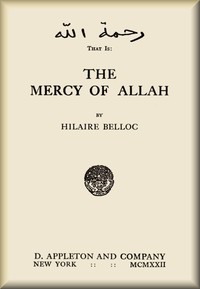
The Mercy of Allah by Hilaire Belloc
Hilaire Belloc's 'The Mercy of Allah' is a short, intense book that feels more like a staged debate than a novel. It’s built around one long conversation that pulls you right into its strange world.
The Story
The setup is simple. A very wealthy old man invites his skeptical nephew to his lavish home. The uncle has one goal: to convince his guest that his enormous fortune is not the result of cleverness or hard work, but is purely a gift from God—a direct sign of divine 'mercy.' He calls this force 'Allah,' but he's talking about a general, providential God. To prove his point, the uncle walks his nephew through his life story, recounting all his business deals and lucky breaks. With each tale of profit and success, he insists, 'See? The Mercy of Allah provided this.' The nephew listens, questions, and pushes back, creating a fascinating tension. The whole book is this intellectual tug-of-war over the meaning of wealth, chance, and grace.
Why You Should Read It
This book got under my skin. It’s not an easy read, but it’s a gripping one. Belloc doesn’t make it clear who you’re supposed to agree with. Part of me found the uncle's argument arrogant and selfish—a way to avoid responsibility. Another part wondered if there was a twisted logic to it. How much of our own success is truly our own doing? The writing is bold and unapologetic. It forces you to pick a side in an argument that feels just as relevant today. Are we self-made, or are we beneficiaries of luck, circumstance, or something greater? You’ll finish the book and immediately want to talk to someone about it.
Final Verdict
This isn't a book for everyone. If you want a fast-paced plot, look elsewhere. But if you enjoy philosophical arguments wrapped in a personal story, this is a brilliant little find. It’s perfect for readers who like classic authors like G.K. Chesterton, for anyone interested in early 20th-century Catholic thought, or for people who just love a good, heated debate about money, morality, and meaning. Give it a try—you might be surprised by how much this old conversation still has to say.
This work has been identified as being free of known copyright restrictions. Share knowledge freely with the world.
James Hernandez
10 months agoOne of the most comprehensive guides I've read this year.
Matthew Gonzalez
2 years agoThe layout of the digital version made it easy to start immediately, the footnotes provide extra depth for those who want to dig deeper. Definitely a five-star contribution to the field.
Richard Gonzalez
4 months agoI appreciate the objective tone and the evidence-based approach.
Emily Wilson
9 months agoI've been looking for a reliable source on this topic, and the insights into future trends are particularly thought-provoking. This exceeded my expectations in almost every way.

Patricia Lee
2 years agoInitially, I was looking for a specific answer, but the quality of the diagrams and illustrations (if applicable) is top-notch. Top-tier content that deserves more recognition.