About 22 minutes
Pictures by Gavarni — Edition Insights
Architecture
5,042 recorded words. 1 minutes difference from this book's estimate.
View Gutenberg source #64526
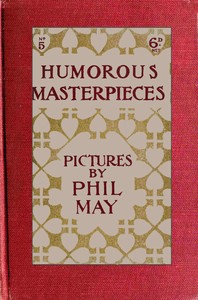
Before opening Pictures by Phil May — Background and Themes, the edition data offers a quick orientation: 4,699 words, 21 min estimated reading time, and 1 detected text section.
The text analysis averages about 16.3 words per sentence, while the detected sections provide another way to judge how the source is divided.
Project Gutenberg metadata also associates the work with “Caricatures and cartoons -- Great Britain,” connecting these edition facts with the source record’s subject description.
Explore this collection
These alternatives are selected using recorded categories and estimated reading time.
About 22 minutes
Architecture
5,042 recorded words. 1 minutes difference from this book's estimate.
View Gutenberg source #64526About 15 minutes
Architecture
3,323 recorded words. 6 minutes difference from this book's estimate.
View Gutenberg source #39110About 15 minutes
Architecture
3,394 recorded words. 6 minutes difference from this book's estimate.
View Gutenberg source #44743Search stored excerpts and compare books → Choose by your preferences →
Choices use stored catalog measurements. Estimates vary with reading speed. A shared category is a catalog label, not a claim that two books have the same argument or literary quality.
Search reads excerpt text stored with this catalog and links to its associated Gutenberg record. The connection is stored in the site database; this tool does not recheck that every excerpt is word-for-word identical to that external record. Excerpt search does not cover every chapter and does not verify historical publication dates.
Catalog snapshot checked: 2026-09-26. Coverage: 93 public books, 93 available source excerpts.
Calculated from edition completeness, EPUB availability, text structure and catalogue metadata. Not a user rating.
Total of 100 points, scaled to a 2.5-5.0 range. Editions with an empty description or a missing EPUB file are not scored.
Public-domain source text
The source text is kept in the dedicated reader, separate from this catalogue record and its commentary.
Phil May's Pictures presents a series of caricatures and cartoons that capture the wit and vernacular of London's costers and cockneys. The drawings, originally published in 1907, are accompanied by brief, dialogue-heavy captions that reveal the humor and social dynamics of their subjects. May's line work is economical yet expressive, often focusing on a single moment of interaction or a punchline delivered in dialect.
The collection is organized into sections such as "Costers and Cockneys," "Brother Brushes," and "In the Bars and Streets," each offering a distinct setting. The captions frequently employ phonetic spelling to convey accent, as in "'Ere y'are, Lidies' Tormentors" or "'Ow I s'y, look at 'er frills." This editorial note examines the structure, recurring images, and movement between scenes that define May's approach.
The book is divided into titled sections that group drawings by subject or setting. "Costers and Cockneys" focuses on street vendors and working-class couples, while "Brother Brushes" shifts to artists and their studios. "In the Bars and Streets" moves to public houses and urban encounters. This structure creates a loose narrative of London life, moving from domestic or market scenes to professional and leisure spaces. The sections are not strictly sequential; instead, they offer thematic clusters that allow May to explore variations on a theme. For instance, within "Costers and Cockneys," several drawings depict arguments or misunderstandings between couples, such as the woman who "chucked" a man for wanting to meet "incandescently." The grouping emphasizes recurring social types and situations.
Certain objects appear repeatedly across sections, anchoring the drawings in a material world. Hats are a frequent motif: a woman exclaims "look at 'is bloomin' 'At," while another criticizes "'er frills" and being "hup like a bloomin' 'am bone." Food and drink also recur—tea, bread and butter, seedy cake, ham sandwiches, and coffee are mentioned in captions. These items are often tied to social rituals or class markers. In "In the Bars and Streets," a character invites another for a drink before an American tour, and a funeral is judged by its refreshments: "Tea and Bread and Butter!" versus "Seedy Cake an' 'Am Sandwich." The repetition of these images grounds the humor in everyday life.
The arrangement of sections creates a journey through different social spheres. The opening "Costers and Cockneys" places the reader in the street or court, with characters like 'Arriet and Bill. "Brother Brushes" then moves indoors to an artist's studio, where Royal Academicians discuss work and interruptions. The final section, "In the Bars and Streets," returns to public spaces but with a different tone—more focused on drinking, charity, and chance encounters. This movement suggests a widening of perspective, from intimate domestic disputes to broader social commentary. The transitions are abrupt, but the consistent use of dialogue and caricature unifies the scenes. May's drawings often capture a single moment, but the sequence of sections implies a day or a series of observations across London.
May's captions rely heavily on phonetic dialect and malapropisms, which serve both as humor and as a marker of class. Phrases like "Mos' 'tronary thing! a'most shertain th' was shome Coffee in it" or "I'll bloomin' well eat yer" are typical. This verbal play creates a rhythm that complements the visual gags. The captions often contain a setup and punchline, as in the exchange about the American tour: "Well, let's go in here and have a Drink before you go." The repetition of certain constructions—such as "Ow I s'y" or "Wot's th' row"—gives the collection a cohesive voice. The dialect is not merely decorative; it shapes the characters' identities and the humor of their situations. May's ear for speech patterns is evident, and the captions are as much a part of the art as the drawings themselves.
Readers approaching Pictures by Phil May will find a compact gallery of late-Victorian and Edwardian humor. The drawings reward attention to both the line work and the dialogue, which together create a vivid sense of character and place. Because the excerpts provide only captions and section titles, the full visual impact of May's caricatures must be inferred. However, the verbal wit and social observation are clear. This collection offers a glimpse into a specific time and milieu, preserved through the artist's keen eye for the absurdities of everyday life.
Leafing through Phil May’s cockney sketches, with their wry, weary humour, I found myself thinking of the quiet dignity in old weavers’ tartans. Both capture a people’s stubborn pride in small things. It reminded me of a gentle afternoon spent looking at Old and rare Scottish tartans — Themes and Context. Different cloth, same thread of belonging, somehow.
Your answers remain private and are stored only in this browser.









