About 15 minutes
Phil May's Gutter-Snipes: 50 Original Sketches in Pen & Ink — A Closer Reading
Architecture
3,323 recorded words. 0 minutes difference from this book's estimate.
View Gutenberg source #39110
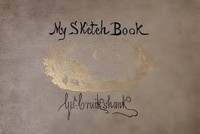
The catalog record for My Sketch Book — Context and Discussion provides practical reading context through 3,394 words, 15 min estimated reading time, and 2 detected text sections.
The text analysis averages about 28.1 words per sentence, while the detected sections provide another way to judge how the source is divided.
Project Gutenberg metadata also associates the work with “Caricatures and cartoons -- Great Britain,” connecting these edition facts with the source record’s subject description.
Explore this collection
These alternatives are selected using recorded categories and estimated reading time.
About 15 minutes
Architecture
3,323 recorded words. 0 minutes difference from this book's estimate.
View Gutenberg source #39110About 21 minutes
Architecture
4,699 recorded words. 6 minutes difference from this book's estimate.
View Gutenberg source #62750About 22 minutes
Architecture
5,042 recorded words. 7 minutes difference from this book's estimate.
View Gutenberg source #64526Search stored excerpts and compare books → Choose by your preferences →
Choices use stored catalog measurements. Estimates vary with reading speed. A shared category is a catalog label, not a claim that two books have the same argument or literary quality.
Search reads excerpt text stored with this catalog and links to its associated Gutenberg record. The connection is stored in the site database; this tool does not recheck that every excerpt is word-for-word identical to that external record. Excerpt search does not cover every chapter and does not verify historical publication dates.
Catalog snapshot checked: 2026-09-26. Coverage: 93 public books, 93 available source excerpts.
Calculated from edition completeness, EPUB availability, text structure and catalogue metadata. Not a user rating.
Total of 100 points, scaled to a 2.5-5.0 range. Editions with an empty description or a missing EPUB file are not scored.
Transcriber's Note: There is no printed text in this book. Some of the plates have handwritten notes. DW
End of the Project Gutenberg EBook of My Sketch Book, by George Cruikshank
George Cruikshank's My Sketch Book (1882) contains no printed text—only 43 plates of satirical drawings. The catalog subject "Caricatures and cartoons -- Great Britain" accurately describes the work, but the excerpts reveal a more specific focus: Cruikshank's plates are densely detailed, often embedding handwritten notes within the images. The transcriber notes that the images viewed in this file are too small to demonstrate the detail, so links to medium and original sizes are provided under each illustration. This editorial note examines how the catalog subject aligns with the actual content, and what the absence of text means for the reader.
The most striking feature of My Sketch Book is its complete lack of printed text. The transcriber explicitly states: "There was no printed text in this book." Instead, meaning is conveyed entirely through Cruikshank's drawings, with some plates containing "imbedded handwritten notes." This format places the work squarely within the tradition of visual satire, where the artist's line and composition carry the narrative. The catalog subject "Caricatures and cartoons" is apt, but the absence of text also distinguishes it from typical illustrated books of the period.
Each plate is numbered from 2 to 43, with a frontispiece and title page. The reader must interpret the scenes without verbal cues, relying on Cruikshank's expressive figures and crowded compositions. The handwritten notes, where present, add a layer of immediacy, as if the artist is commenting directly on the scene. This wordless approach forces a slower, more attentive viewing—each detail matters.
The excerpts repeatedly emphasize the importance of viewing the plates at full size. The transcriber notes that the images in the file are "too small to demonstrate the detail of the drawings," and provides links to "medium size and original size" versions. This practical observation points to a key characteristic of Cruikshank's style: his caricatures are dense with small, telling details—facial expressions, background elements, and satirical props—that reward close inspection.
For instance, the list of plates includes 43 numbered entries, each presumably a distinct scene. Without seeing the images, one can infer that Cruikshank's satire operates through visual accumulation: a crowd of characters, each with a distinct posture or gesture. The catalog subject "Caricatures and cartoons" captures the genre, but the emphasis on scale suggests that the work's impact depends on the viewer's ability to examine the plates closely, not just glance at reduced reproductions.
The metadata credits Cruikshank as the illustrator, but My Sketch Book is entirely his creation—no author is listed. The title page and frontispiece are part of the plate sequence, reinforcing that the book is a portfolio of his work. The handwritten notes mentioned by the transcriber hint at a personal, almost diaristic quality: Cruikshank may have used the sketches to comment on contemporary events or types.
The catalog subject is broad, but the work itself is a specific artifact of 19th-century British visual culture. Cruikshank was a prolific caricaturist, and this collection likely targets social or political targets of his era. Without text, the viewer must decode the satire from visual cues alone. The absence of explanatory captions means that modern readers may need contextual knowledge to fully grasp the references, but the drawings themselves remain vivid and accessible as examples of the caricaturist's art.
Readers approaching My Sketch Book should view the plates at the largest available size to appreciate Cruikshank's intricate linework and satirical details. The handwritten notes, where legible, offer direct insight into the artist's intent. This is a work to be seen, not read—a visual document of Victorian satire that rewards patience and close observation.
Flipping through My Sketch Book, I lingered on Cruikshank’s crowded street scenes, each face a tiny story. It reminded me of the quiet way rooms hold their inhabitants’ histories, the furniture and shadows speaking without words. That same silent narrative lives in A Book of Distinctive Interiors — Reading Notes, where empty chairs seem to wait for someone’s return. A different century, yet the same tender attention to what is left unsaid.
Create a short personal record of your experience with this book.









